

‘Weather’ to close, or not – it’s snow easy decision.
As a senior leadership team one thing you find yourself doing is checking the weather frequently. Considering is it going to need to be a wet break? Will that trip to the coast in forecast 35 degree heat be okay? And most concerning of all – will a decision need to be made that could affect school opening? This is never a decision taken lightly, but the below gives an inside view as to the things that happen when such a call is being considered.
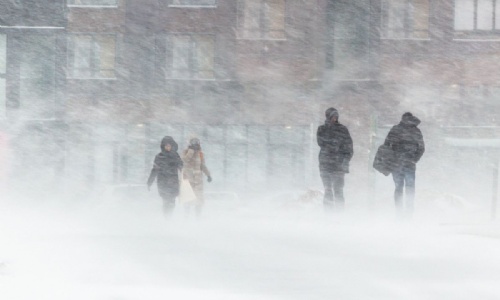
With a weather-related closure, planning starts early. In this age of modern technology, everyone has reasonably accurate access to weather forecasts. Whenever a warning is advised, key staff are regularly monitoring the forecast, trying to predict what will happen and sharing thoughts. Taking the example of a snow closure…
Planning starts prior to the day when snow is forecast. The weather is monitored and occasionally a reminder message may be sent to parents/ carers of the steps that would be taken should the school need to close. All this needs to be done in a way that reassures and informs, but ultimately serves not to create extra drama – the aim is always to have 'business as usual'. In the background, text and alert messages are prepared for parents, students and staff just in case.
On a morning where a school closure may be necessary, at 6am a member of the site team (who lives locally) arrives on site to assess the car park and the footpaths. They are considering how easy is it for buses and cars to access the school site, how safe the footpaths are to walk on and how long it will take to clear.
Shortly after that they will contact key members of senior staff to give their update.
Around 5:30am the Bus company are usually just starting their vehicles and by 6:15 they have been in touch to outline their experiences on the roads so far and whether they feel their services will be hampered.
Alongside local knowledge given by the site team and Connexions is the need to consider the weather forecast, in school events and any local travel updates. It can be a quickly changing situation – vehicles can become stuck on certain roads and bands of snow can fall in some areas, but not in others. This is made all the more difficult when you consider that we also need to have enough staff on site to ensure the school will be able to function. Whilst many staff live locally, there are other staff who live anywhere from York to Skipton, Ripon to Bradford, Tadcaster to Keighley and everywhere in between.
Matters can be further complicated if there are events in school planned – public examinations cannot be cancelled, guest speakers may be travelling a long distance or an event, like the school show, could be set to see hundreds of extra people visit the site.
Furthermore, although it might be reasonably calm early in the day, if a weather forecast shows heavier snow is arriving later in the morning, this further complicates decisions because if people can get to school, you need to be sure they can get home safely!
These are just the in school considerations. There is also always a sense of wider considerations, noting that any closure is going to have an impact on families – impacting working patterns and regular routines.
All of this adds to the mix of considerations being taken about what to do.
At the same time, we will not be the only school considering whether there is a need to close. Head teachers will communicate with one another to see what decision they are taking. With many of our teaching staff being parents themselves, a closure of a local primary school may mean a member of staff who could safely get to Prince Henrys is suddenly having to remain at home to look after their own children because their primary school is closed.
So, the point is, with these decisions you are quickly being asked to consider numerous factors:
- The weather
- The school buses
- The safety of the site
- The local road travel conditions
- The conditions across the entire catchment area (of students and staff)
- The ability of the buses to make their journey safely
- The number of staff who can get into school to teach their lessons.
- The impact on parents if school has to close
Considering all of this information, there is never a correct answer that will please all stakeholders.
One question often asked is why don’t we just open later? This is difficult because of the nature of our catchment area. We seek to ensure that we do not disadvantage any student - if we open later in the day many people who live locally could easily make their way to Prince Henrys on foot. However, a sizeable proportion of our students make their way to school by bus. Is it fair for those to miss out on their education because the bus companies cannot run a later service during the day? Furthermore, if classes are half full, staff may end up repeating the same lesson later to support those that were not able to attend. This means that the decision to take, looking at all the evidence, is always whether the school opens or is closed for the day.
What we can do occasionally, if the information supports it, is have an ‘in-school delayed start’. This means that students can arrive throughout the first hour of the day with the timetable starting an hour later than usual. This can only be done if we know buses are running and will get to school at a reasonable time. This delay can be accommodated with students using the halls as a holding area with the smaller number of staff present able to oversee them until we know we are in a position that there are enough staff are in the building to allow timetables to go ahead.
All of the above needs to be considered early, with us always aiming to make a decision by around 7am to support parents, staff and students should there need to be changes. The mantra is always ‘If there is no message, school is open as usual’. If the call is made to close school, parents will receive a text message via their personal Arbor text message number, the website will be updated and staff will communicate with students via email, Teams and Arbor during the day with activities they can take part in.
Snow days are usually only one day in length so the activities are often more recap and/or independent learning, allowing students the opportunity to catch up, but also enjoy the snow.
Should there ever be a need for a much longer closure, the intention would always be to look to provide alternative work or indeed live teams lessons to support students' learning – this, however, depends on the length of time a closure is needed and the availability of staff.
Thankfully, such events are rare and we will always aim to keep the school running normally – we know the benefits of routine and keeping things 'as normal' also helps students understand the need for resilience at times. Hopefully, this inside story has given you a bit of an insight into the range of considerations when making such a difficult decision.